How to Use Calcium Iodate for Health Benefits?
Calcium iodate is gaining attention for its health benefits. This compound, a source of iodine, plays a vital role in maintaining thyroid function. Iodine is essential for hormone production in the thyroid gland. Without sufficient iodine, people may face serious health issues.
Incorporating calcium iodate into your diet can provide a variety of advantages. It supports metabolic processes and helps maintain energy levels. Consuming adequate iodine can improve cognitive function too. However, proper dosage is crucial. Too much calcium iodate might lead to adverse effects, and the balance is not always easy.
There are several ways to use calcium iodate effectively. Consider dietary supplements or fortified foods. Always consult a healthcare professional before beginning a new supplement. Reflect on your needs, and adjust the intake accordingly. Finding the right balance can lead to remarkable improvements in overall health.
Understanding Calcium Iodate and Its Nutritional Value
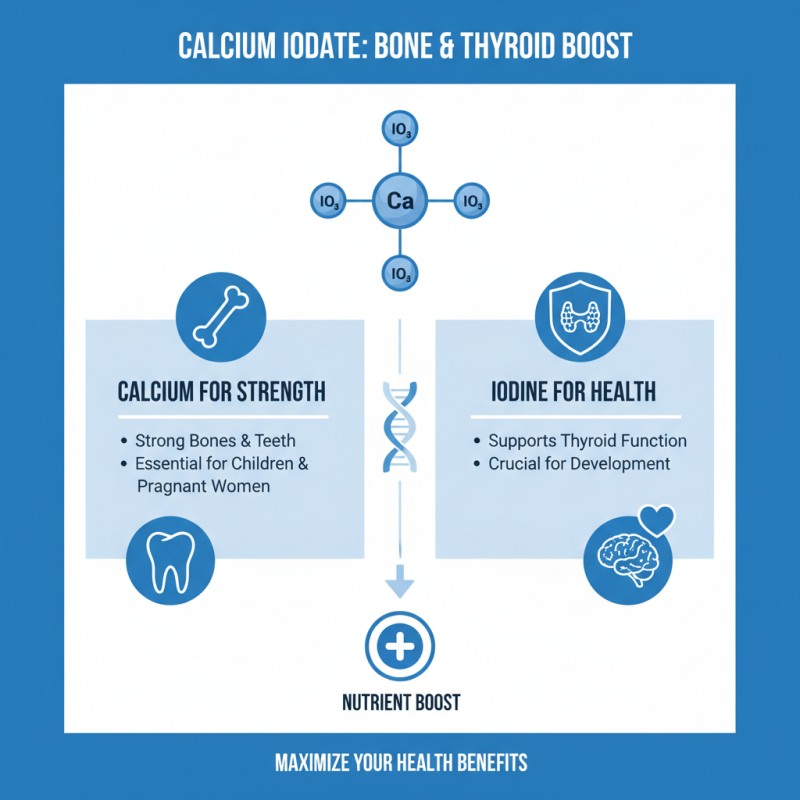
Calcium iodate is a compound rich in both calcium and iodine. It serves as a vital supplement for those lacking these nutrients. Understanding its nutritional value is crucial for maximizing its health benefits. Calcium strengthens bones and teeth, while iodine supports thyroid function. Both nutrients are especially important for growing children and pregnant women.
Tips: Incorporate calcium iodate into your diet gradually. Start by adding small amounts to meals. Monitor how your body reacts to it. Always consult a healthcare professional if unsure.
Calcium iodate can be found in some fortified foods. However, many people don't consume enough iodine. Deficiency may lead to health issues, like goiter. Similarly, calcium deficiency can cause osteoporosis. A combination of these elements can optimize overall health. Experiment with different foods, as cooking methods may affect nutrient levels.
Don’t overlook the potential challenges. Some may taste bitter or have an unusual texture. Balancing flavors is key to enjoying these nutrients. Always reassess your dietary choices and remember that moderation is vital. Educate yourself about proper dosages to avoid excess.
Health Benefits of Calcium Iodate for Thyroid Function
Calcium iodate is gaining attention for its potential health benefits, especially for thyroid function. The thyroid gland plays a crucial role in regulating metabolism and hormone levels. Insufficient iodine can lead to thyroid issues, such as goiter and hypothyroidism. This is where calcium iodate can come into play, providing a safe source of iodine.
Many people overlook the importance of iodine. It is essential for synthesizing thyroid hormones. With sufficient calcium iodate intake, the body can better maintain hormone balance. Symptoms of thyroid dysfunction, like fatigue and weight gain, may improve with proper iodine levels. Regular monitoring and incorporating calcium iodate can be beneficial, yet individual responses may vary. Some might experience health improvements, while others may not notice significant changes.
Including calcium iodate in a balanced diet alongside other nutrients is crucial. However, not everyone may need supplementation. It's essential to assess dietary intake first. Consulting with a healthcare professional is advisable before making changes. Personal experiences may differ, and it’s vital to pay attention to how your body responds. After all, health is a personal journey with unique paths for each individual.
How to Use Calcium Iodate for Health Benefits? - Health Benefits of Calcium Iodate for Thyroid Function
| Benefit |
Description |
Recommended Dosage |
Sources |
| Supports Thyroid Function |
Calcium iodate is a source of iodine which is essential for thyroid hormone production. |
150-200 mcg per day |
Iodine-rich foods, such as fish, dairy, and iodized salt. |
| Enhances Metabolism |
Adequate iodine levels help regulate metabolism, aiding in weight management. |
150 mcg per day depending on age and gender |
Seaweed, dairy products, and iodized salt. |
| Improves Cognitive Function |
Iodine is linked with cognitive development and function in both children and adults. |
90-200 mcg daily, particularly in pregnancy and early life |
Shellfish, cranberries, and potatoes. |
| Supports Immune System |
Adequate iodine levels can boost immune function and help fight infections. |
150 mcg for adults |
Iodized salt, eggs, and dairy products. |
Recommended Dosage and Usage of Calcium Iodate
Calcium iodate is often used for its potential health benefits. However, using it effectively requires careful consideration of recommended dosage. Adults typically benefit from a daily intake of 150 to 300 micrograms. This small dosage can be easily integrated into a balanced diet, ideally through supplements or fortified foods.
When taking calcium iodate, consistency is key. It can be challenging to remember daily supplementation. Setting a reminder or incorporating it into your morning routine might help. Some individuals may experience side effects such as stomach upset. It's important to monitor your body’s reaction and consult a professional if necessary.
For children, the dosage is significantly lower, usually around 75 to 150 micrograms. Precise measurements are critical to avoid overconsumption. Each individual's needs may vary, so adjusting your intake based on specific health requirements is wise. Balancing calcium iodate with other nutrients can yield better results, but finding that balance is often a trial-and-error process.
Food Sources and Supplements Containing Calcium Iodate
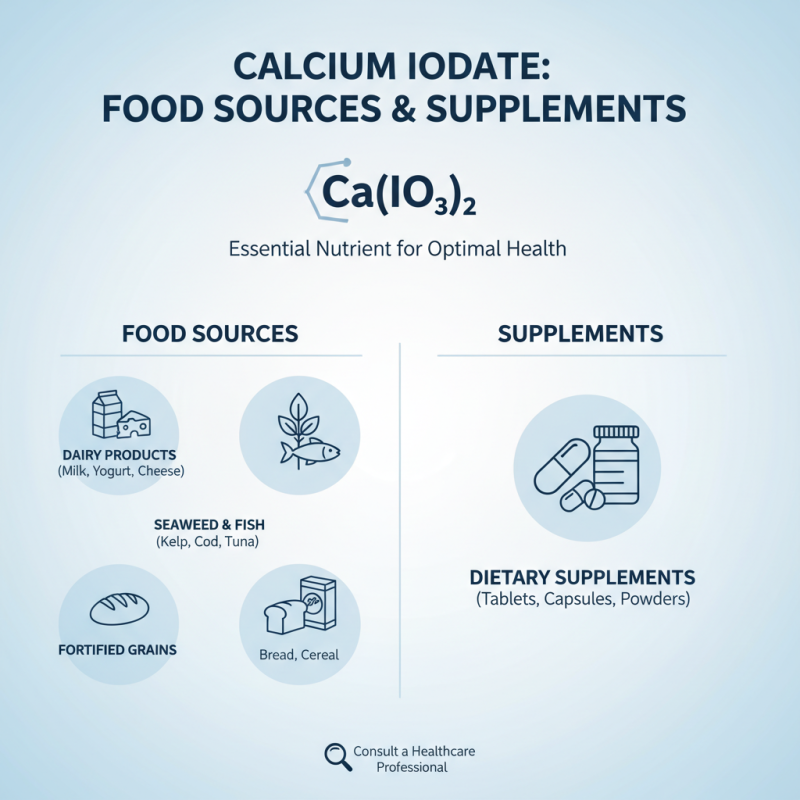
Calcium iodate is an important nutrient for optimal health. You can find it in various food sources. Dairy products, seaweed, and fish are rich in calcium iodate. Fortified breads and cereals also provide this essential mineral. The recommended daily intake varies, but adults need about 150 micrograms of iodine. Many people fall short of this requirement.
Supplements containing calcium iodate are widely available. They come in different forms, including tablets and powders. When choosing a supplement, look for those that provide adequate levels of calcium and iodine. Always check for third-party testing to ensure product quality.
Tips: When increasing your intake, consider integrating iodized salt into your meals. This can help boost your iodine levels sustainably. Balance your diet with natural sources to avoid excessive supplementation. Too much iodine can lead to health issues, so moderation is key. Regularly assess your dietary habits to ensure you're meeting your nutritional needs without overdoing it.
Safety Considerations and Potential Side Effects of Calcium Iodate
Calcium iodate is sometimes used for its potential health benefits. However, it is important to consider safety first. While it may support thyroid health, mishandling can lead to health issues. Improper dosages may cause toxicity. Symptoms include nausea, abdominal pain, or even diarrhea. Always consult a health professional before starting any supplement.
The side effects of calcium iodate may vary among individuals. Some may experience allergic reactions. Uncommon effects can include skin rashes or respiratory issues. Monitoring your body's response is crucial. If you notice anything unusual, it’s wise to seek medical advice. Everyone reacts differently to supplements, and what works for some may not work for others. Use caution and stay informed.
Health Benefits of Calcium Iodate