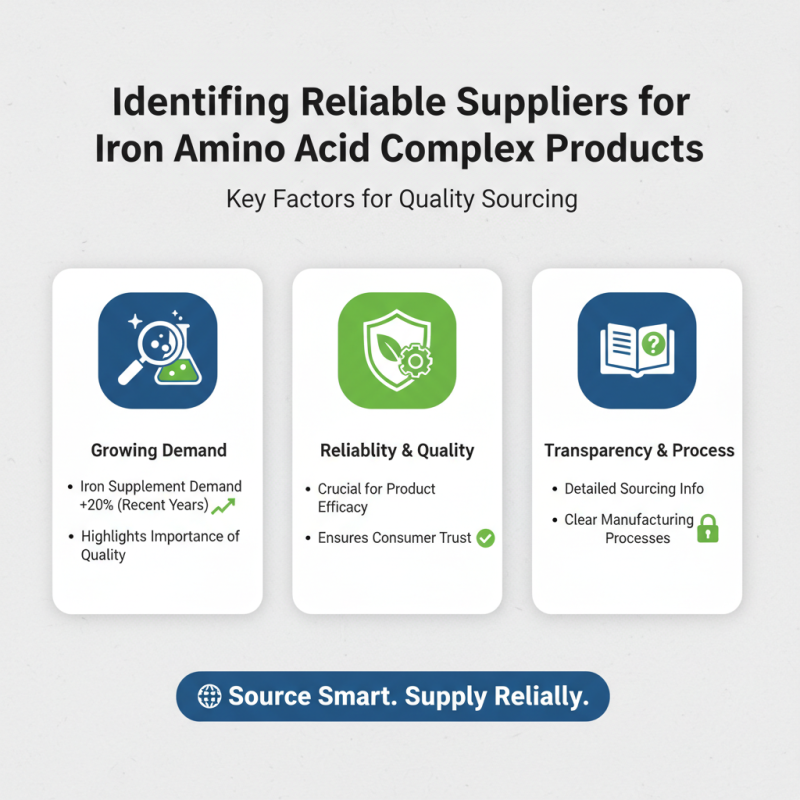
Top Tips for Sourcing Iron Amino Acid Complex for Your Business?
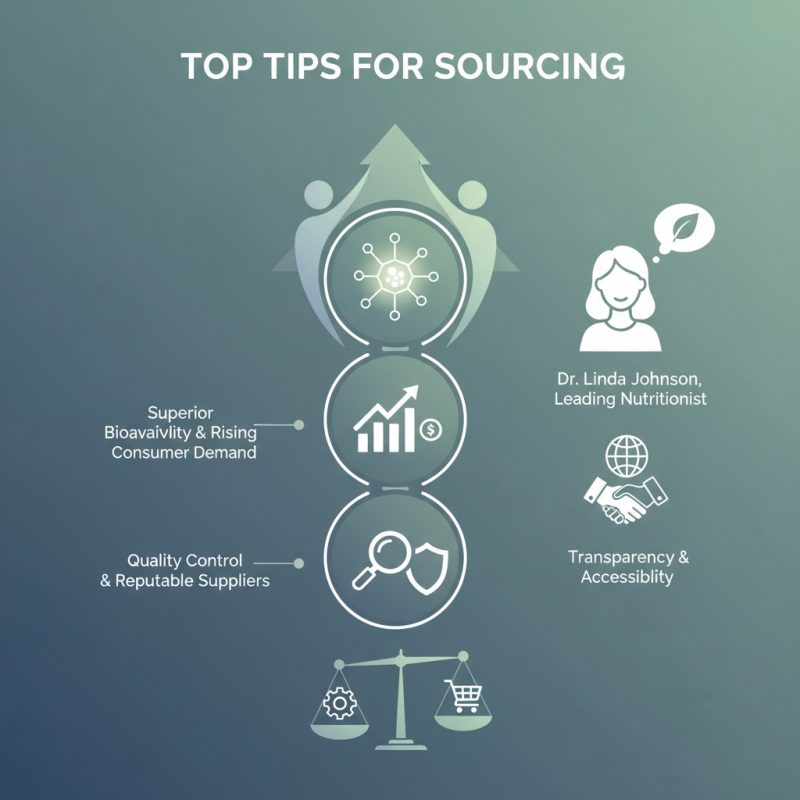
In the competitive landscape of nutritional supplements, sourcing high-quality iron amino acid complex is crucial. This compound is known for its superior bioavailability and efficacy. A recent report from the Global Nutraceutical Industry reveals that amino acid chelated minerals, including iron amino acid complex, have seen a growth rate of 8% annually. Experts agree that this trend reflects a rising consumer demand for effective iron supplementation.
Dr. Linda Johnson, a leading nutritionist, emphasizes, "Consumers today seek products that provide more than just basic nutrition." Investors should consider the growing research backing the benefits of iron amino acid complex. However, sourcing this ingredient is not without challenges. Quality control remains a significant concern as not all suppliers meet industry standards.
It’s essential to evaluate suppliers carefully. Some may promise exceptional quality but fail in practical applications. Transparency in sourcing and production processes is key. Engaging with reputable suppliers can mitigate the risks associated with poor-quality ingredients. The future of iron amino acid complex lies in the balance between quality and accessibility. Businesses must remain vigilant and informed as they source this vital nutrient.
Understanding Iron Amino Acid Complex and Its Benefits for Businesses
Iron amino acid complex is gaining momentum in various sectors, especially in nutrition and health products. This complex is a chelated form of iron, which enhances absorption in the body. Studies highlight that it significantly improves bioavailability compared to traditional iron supplements, making it a preferred choice for businesses targeting health-conscious consumers. According to recent reports from nutrient research, the iron amino acid complex can increase absorption rates by up to 50%. This improvement is crucial for industries focusing on functional foods and dietary supplements.
Businesses that incorporate iron amino acid complex into their products can benefit from its ability to address iron deficiency anemia. An estimated 1.62 billion people, or roughly 24.8% of the global population, are affected by iron deficiency, according to the World Health Organization. This statistic underscores a pressing market need. Additionally, products containing this complex can cater to various demographics, including athletes and pregnant women, who require higher iron intake.
However, sourcing high-quality iron amino acid complex poses its own challenges. Not all suppliers maintain the same quality standards. Testing for purity and bioactivity is essential, yet not always conducted. Companies should understand their supply chain and seek reliable sources. Balancing cost and quality is another area for potential reflection. The market is competitive, and businesses must ensure their products not only meet consumer needs but also uphold safety and efficacy.
Iron Amino Acid Complex Market Insights
This bar chart illustrates the growing market demand for Iron Amino Acid Complex across different industries, highlighting key sectors such as Nutrition, Pharmaceuticals, and Animal Feed. The data reflects the estimated market size in millions of dollars for the year 2023.
Evaluating Quality Standards and Certifications in Sourcing
When sourcing iron amino acid complexes, quality standards and certifications are crucial. Various industry reports indicate that over 70% of consumers prioritize quality when choosing supplements. Reliable sources, like the Journal of Nutritional Biochemistry, emphasize that purity and bioavailability are vital. Look for certifications from recognized authorities, such as GMP (Good Manufacturing Practices) and NSF International. These certifications ensure that the products meet strict safety and quality criteria.
Evaluating suppliers can also be challenging. Some may claim to meet high standards but lack proper documentation. Transparency is essential. A 2023 report from the Nutraceuticals Global Association highlighted that about 40% of suppliers do not provide adequate proof of certification. It's worth investing time in verifying these claims. Additionally, requesting third-party testing results can provide further assurance of quality. Engaging with suppliers who are open to dialogue about their processes can reveal much about their commitment to quality.
Negotiating Pricing and Terms with Suppliers of Iron Amino Acid Complex
Negotiating pricing and terms with suppliers of iron amino acid complex can significantly impact your business's bottom line. Understanding the market prices is crucial. Recent reports indicate that the average cost for iron amino acid complex ranges between $15 to $30 per kilogram, depending on purity and sourcing location. This variability highlights the importance of thorough market research before engaging suppliers.
Building a strong relationship with suppliers can lead to better pricing. Use competitive pricing to leverage negotiations. Request quotes from multiple suppliers to create a benchmark. Always consider the supplier’s reputation and reliability. A supplier with a strong track record can save you headaches in the long run.
When discussing terms, focus on payment schedules and delivery timelines. Aim for favorable terms that align with your cash flow. For instance, negotiating net 30 or net 60 payment terms can relieve immediate financial pressure. It's common to experience friction in these discussions; remain flexible and open to compromise, yet firm on essential requirements. Remember, every negotiation is also a learning process.
Assessing Global Markets and Trends for Iron Amino Acid Complex Sales
The global market for iron amino acid complex is witnessing significant growth. In 2022, the market was valued at approximately USD 230 million and is projected to grow at a CAGR of around 5% from 2023 to 2030. This growth is largely driven by increasing demand in the nutritional supplement sector. Iron amino acid complexes are often preferred due to their enhanced bioavailability compared to traditional iron forms.
Awareness regarding iron deficiency has surged, particularly in developing countries. Reports indicate that around 1.62 billion people suffer from anemia worldwide, with a considerable portion linked to insufficient iron intake. This scenario creates a pressing demand for innovative iron solutions. Companies entering this market must stay updated on industry trends. They should leverage data-driven insights to tailor their product offerings for specific demographics.
Despite these promising trends, challenges also exist. The market faces competition from alternative iron supplements. Furthermore, fluctuating raw material costs can impact profitability. It's essential for businesses to conduct thorough market assessments and keep an eye on regulatory changes. Robust market analysis can help navigate potential pitfalls. Engaging with industry experts and utilizing reliable data is crucial for making informed sourcing decisions.
Top Tips for Sourcing Iron Amino Acid Complex for Your Business
| Region |
Market Size (2023) |
Projected Growth Rate (CAGR 2023-2028) |
Key Trends |
Challenges |
| North America |
$250 million |
5.2% |
Increased demand for supplements |
Regulatory compliance issues |
| Europe |
$300 million |
6.0% |
Rising awareness of iron deficiency |
High competition among suppliers |
| Asia-Pacific |
$450 million |
7.5% |
Growing health and wellness trend |
Supply chain disruptions |
| Latin America |
$120 million |
4.3% |
Increased healthcare spending |
Economic instability |
| Middle East and Africa |
$100 million |
5.0% |
Emerging market opportunities |
Limited distribution networks |