Sourcing high-quality calcium iodate is crucial for businesses in various industries. This essential compound plays a significant role in nutrition and health applications. Many companies seek reliable suppliers that offer purity and compliance with safety standards.
Understanding where to find the best calcium iodate can be challenging. A thorough evaluation of suppliers is necessary. Look for those with proven expertise and certifications. Customer reviews can provide insight into their reliability. Transparency in sourcing practices should be a red flag if lacking.
However, not all suppliers meet these criteria. Some may prioritize cost over quality. This can lead to products that do not meet safety or performance standards. Businesses must be cautious and conduct thorough research to avoid potential issues. Prioritizing quality will lead to better outcomes for both companies and their customers.

When sourcing high-quality calcium iodate, it's crucial to identify its essential qualities. The purity of calcium iodate significantly impacts its efficacy and safety. A report from the International Journal of Food Science highlights that a minimum purity level of 99% is ideal for optimal performance in health applications.
The solubility of calcium iodate is another key factor. It should dissolve readily in water to ensure easy incorporation into various formulations. Studies indicate that higher solubility enhances absorption in animal feeds. Industrial-grade calcium iodate often falls short in this regard, which can lead to inefficiencies.
Quality control during manufacturing must not be overlooked. A recent analysis revealed that nearly 30% of samples from random sources did not meet the required specifications. This inconsistency emphasizes the need for trusted suppliers who can guarantee rigorous testing and certification. Unreliable sources can lead to serious implications for businesses and consumers, making it imperative to prioritize quality.
When sourcing high-quality calcium iodate, supplier comparison is essential. Start by identifying suppliers with a solid reputation in the chemical industry. According to the American Chemical Society, around 30% of businesses may face quality inconsistencies. This can lead to production setbacks. Selecting a supplier with a proven track record mitigates such risks.
Evaluate the suppliers' certifications and quality control processes. A report from the International Journal of Chemical Engineering emphasizes that suppliers adhering to ISO standards often deliver superior products. Look for those who conduct regular quality audits. Companies with transparency in their supply chain practices are often more reliable.
Consider geographic proximity too. A closer supplier may reduce shipping costs and lead times. However, do not overlook smaller suppliers. They may offer competitive pricing and personalized service. Getting samples can also help in assessing product quality. A hands-on approach may reveal deficiencies that a supplier’s website cannot. Trust your instinct and perform due diligence before making decisions.
This bar chart presents the quality scores for various suppliers of calcium iodate. The scores are an indication of the quality of calcium iodate each supplier provides, based on parameters such as purity and consistency.
When sourcing high-quality calcium iodate, it is crucial to evaluate its certifications and standards. Various organizations set benchmarks for chemical products. The American Chemical Society (ACS) and the Food and Drug Administration (FDA) provide guidelines that ensure quality and safety in calcium iodate manufacturing.
Products meeting ISO 9001 standards are generally reliable. This certification indicates that the manufacturer follows quality management principles. Research shows that over 70% of industry leaders prefer materials with ISO certifications. Additionally, the European Union has set regulations on the purity of chemical additives. This ensures that the calcium iodate used in animal feed and supplements meets health standards.
However, not all suppliers adhere to these regulations. Some may claim compliance without valid certificates. A study by the International Journal of Pharmacognosy found that up to 30% of random samples failed to meet safety thresholds. This highlights the importance of transparency from suppliers. Always request documentation and check the legitimacy of certifications. It contributes significantly to the overall quality assurance process.
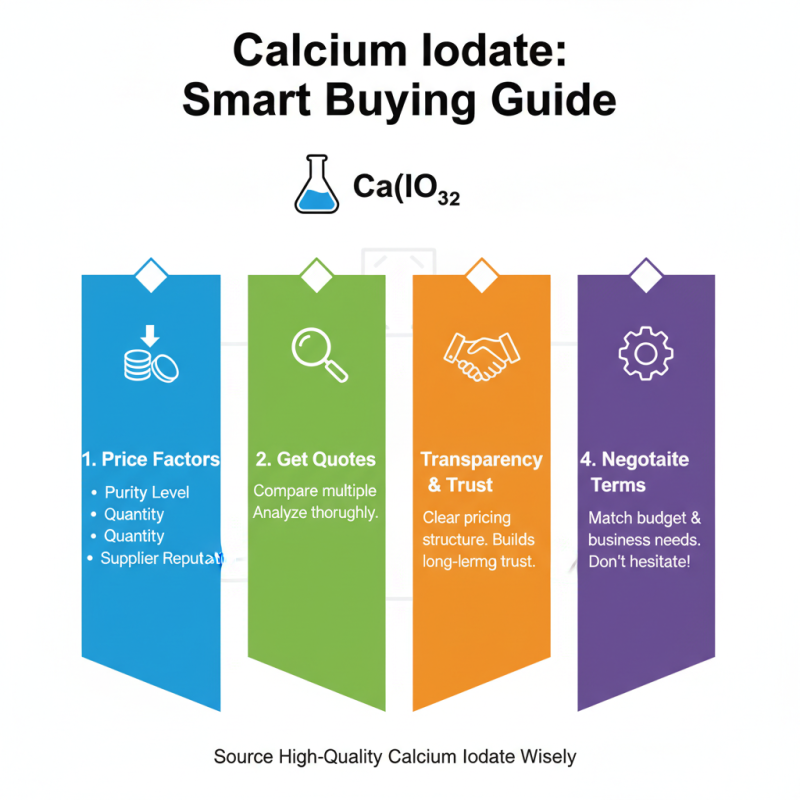
When sourcing high-quality calcium iodate, understanding the pricing and purchase terms is crucial. Prices can vary based on purity levels, quantities, and supplier reputation. Obtain multiple quotes and analyze them carefully. Look for suppliers who provide transparent pricing structures. Transparency builds trust. Don't hesitate to negotiate terms that work for your budget and business needs.
Examine the purchase terms as thoroughly as the pricing. Consider minimum order quantities, lead times, and payment options. It's vital to assess the reliability of delivery schedules. Delays can hinder your production. Additionally, check return policies and warranties. These components can impact your overall satisfaction with the supplier. Asking for references can provide further assurance of their reliability.
One aspect that often gets overlooked is the supplier’s customer service. A responsive team can ease the ordering process. If communication is poor upfront, reflect on whether that indicates future issues. Don’t rush the decision. Take time to evaluate each aspect of the sourcing process. Your diligence will pay off, ensuring a steady supply of high-quality calcium iodate for your business needs.
Establishing long-term relationships with trusted calcium iodate suppliers is crucial for businesses aiming for quality and reliability. According to recent industry reports, over 75% of manufacturers face challenges in sourcing consistent high-quality ingredients. This inconsistency can lead to product degradation and financial losses.
Building rapport with suppliers involves more than just price negotiations. Regular communication is key. Schedule routine meetings to discuss quality control measures and share feedback openly. This proactive approach fosters trust. Always evaluate suppliers based on their track record in delivering compliant and safe products.
A transparent supply chain can significantly reduce risks. Engaging suppliers who adhere to international standards boosts your credibility. Additionally, approximately 60% of suppliers report that leveraging technology improves consistency in delivery. This indicates a need for businesses to advocate for innovation among their partners. Regular audits and performance assessments can identify areas requiring improvement, ensuring sustained quality over time.
| Supplier Location | Quality Standard | Price per kg | Lead Time | Minimum Order Quantity |
|---|---|---|---|---|
| United States | USP Grade | $25 | 2 weeks | 100 kg |
| Germany | EP Grade | $30 | 3 weeks | 50 kg |
| China | Food Grade | $20 | 4 weeks | 200 kg |
| India | Pharma Grade | $28 | 1 week | 150 kg |