The demand for organic minerals is rising globally. A recent report from Grand View Research indicates that the organic minerals market is projected to grow significantly. This growth reflects the increasing awareness among consumers about the benefits of natural nutrients. Organic minerals contribute to health and sustainability, making them essential for various industries.
These minerals are not just components of products; they are integral to improving agricultural practices and enhancing food quality. According to the International Fertilizer Association, the use of organic minerals in agriculture can increase crop yields and improve soil health. For manufacturers, sourcing organic minerals can lead to higher product value and consumer trust.
Despite the benefits, there are challenges. Sourcing quality organic minerals can be difficult, and the market is sometimes saturated with subpar options. Buyers need to be discerning and informed to ensure they are obtaining reliable products. Understanding both the benefits and the potential pitfalls is crucial for making wise purchasing decisions in this thriving market.

Organic minerals play a vital role in modern agricultural practices. They enhance soil fertility and improve crop yields. By enriching the soil, organic minerals help farmers grow healthier plants. These minerals are derived from natural sources, making them a sustainable choice for agriculture. They contribute to better nutrient absorption, which ultimately leads to robust plant growth.
Understanding the application of organic minerals is essential. They can improve soil structure, enhance microbial activity, and reduce dependency on synthetic fertilizers. Farmers using organic minerals often notice increased resilience in crops against pests and diseases. This approach not only fosters crop health but also supports ecosystem balance. However, transitioning to organic minerals can come with challenges, such as initial costs and the need for education on best practices.
While the benefits are evident, careful consideration is necessary. Some farmers may struggle to adapt traditional methods to incorporate organic minerals. Results can vary based on soil conditions and climate. Continuous learning and experimentation are crucial for optimizing the use of these minerals in specific agricultural settings. Embracing organic minerals requires an open mind and a commitment to improving agricultural sustainability.
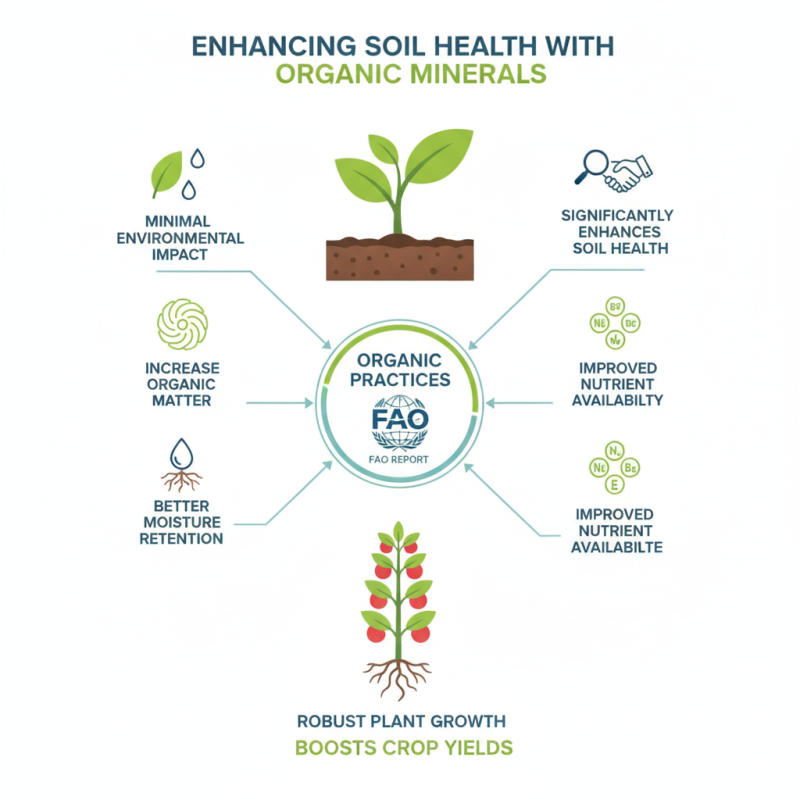
Organic minerals have minimal impact on the environment while significantly enhancing soil health. According to a report by the Food and Agriculture Organization (FAO), organic practices can improve soil fertility by increasing organic matter. This leads to better moisture retention and nutrient availability. Healthy soil promotes robust plant growth, ultimately boosting crop yields.
The use of organic minerals is gaining traction globally. A study from the International Journal of Agronomy highlights that organic amendments can reduce the need for synthetic fertilizers. This shift translates to lower production costs. Additionally, organic minerals improve microbial activity in the soil. Enhanced microbial populations support nutrient cycling, further boosting soil health.
Despite these benefits, challenges remain. The effectiveness of organic minerals can vary based on soil type and environmental conditions. Some farmers may find it difficult to transition from conventional minerals to organic ones. Research indicates that not all organic sources provide the same nutrient profiles. Ongoing studies are necessary to fully understand the long-term benefits of organic minerals in diverse agricultural systems.
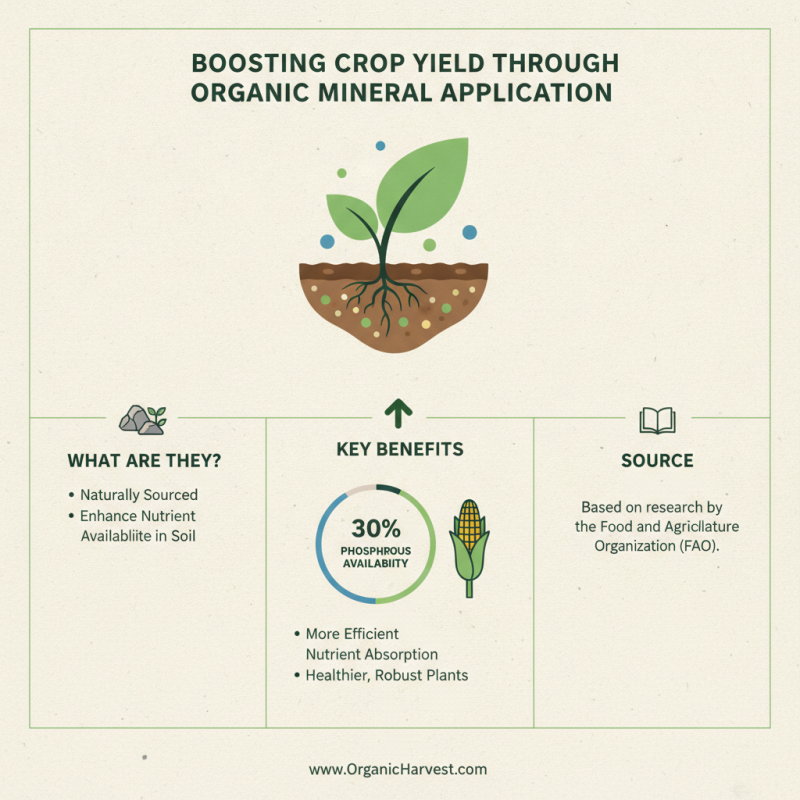
Organic minerals are gaining traction among farmers for their potential to boost crop yield. Recent studies indicate that these minerals enhance nutrient availability in soils. For instance, research by the Food and Agriculture Organization suggests that properly applied organic minerals can improve phosphorus availability by up to 30%. This allows crops to absorb nutrients more efficiently, leading to healthier plants.
Application methods are critical in realizing these benefits. Farmers often see varying results based on how they incorporate organic minerals into their practices. It’s noted that foliar applications often yield faster results compared to soil applications. Moreover, not all organic minerals perform the same way across different soil types. The complexity of soil chemistry requires ongoing research and field trials to determine optimal application strategies.
Despite the promise of organic minerals, challenges remain. Some farmers report that initial costs can be high, deterring them from transitioning fully. Additionally, there's often a learning curve involved in understanding how to effectively integrate these minerals into existing farming systems. Continued education and research are needed to fully harness the potential of organic minerals for crop yield improvements worldwide.
The rise of sustainable farming is a crucial topic in agriculture today. Organic minerals play a vital role in promoting this movement. According to a report by ResearchGate, the use of organic minerals can boost crop yield by 10% to 20%. Such minerals enhance soil health, leading to better water retention and nutrient availability. Farmers adopting these practices see improved soil structure and fertility over time.
Furthermore, organic minerals are less harmful to the environment compared to synthetic alternatives. Studies indicate that they reduce chemical runoff into waterways by up to 30%. This reflects a growing trend toward eco-conscious farming. Farmers face challenges when transitioning to organic minerals, including higher initial costs and the need for education. Yet, the long-term benefits often outweigh these obstacles.
Consumer demand for organic products continues to rise. In 2022 alone, the organic market grew by 14%. This growth translates into greater incentives for farmers to adopt organic farming methods. As we move forward, collaboration between farmers, researchers, and consumers will be essential in optimizing the use of organic minerals for sustainable agriculture. The farming landscape is changing, and the integration of organic minerals can elevate it further.
| Benefit | Description | Impact on Farming |
|---|---|---|
| Improved Soil Health | Enhances soil structure, increases organic matter, promotes beneficial microorganisms. | Leads to better crop yields and healthier plants. |
| Enhanced Nutrient Availability | Organic minerals help in the release and absorption of nutrients in plants. | Improves the nutritional quality of crops. |
| Increased Crop Resilience | Boosts plants' ability to withstand stresses such as drought and disease. | Leads to stable production even in adverse conditions. |
| Reduction in Chemical Inputs | Decreases the need for synthetic fertilizers and pesticides. | Promotes environmentally friendly farming practices. |
| Sustainable Farming Practices | Aligns with organic farming principles, supporting ecological balance. | Fosters long-term agricultural sustainability. |
| Improved Crop Quality | Organic minerals contribute to higher essential oil and nutrient content in produce. | Enhances consumer satisfaction and market value. |
| Better Water Retention | Organic matter increases soil's ability to hold water. | Reduces the frequency of irrigation needed. |
| Supports Biodiversity | Promotes a diverse range of soil organisms and plants. | Contributes to ecological balance and ecosystem health. |
| Improved Soil Microbial Activity | Encourages beneficial microbes which enhance nutrient dynamics. | Results in more efficient nutrient cycling in soils. |
| Reduction in Soil Erosion | Strengthens soil structure, preventing loss of topsoil. | Preserves soil fertility and productivity over time. |
Organic minerals are gaining traction across various global markets due to their versatility and benefits. These minerals are naturally occurring compounds that can enhance product quality in several industries. They play a significant role in agriculture, food production, and even pharmaceuticals. For example, the global organic mineral market is projected to reach $12 billion by 2027, according to industry reports. This figure highlights the increasing demand and recognition of organic minerals.
In agriculture, organic minerals promote soil health and enhance crop yield. Studies indicate that using organic minerals can increase crop productivity by up to 30%. This improvement stems from their ability to improve nutrient absorption in plants. In the food industry, organic minerals are often added to enrich the nutritional value of products. They help fortify foods with essential elements, improving overall health benefits for consumers.
Tip: For those looking to promote sustainability, consider incorporating organic minerals into your production processes. They can lead to healthier outcomes for both soil and crops.
However, not all organic minerals are created equal. Some may not provide the promised benefits. It's essential to conduct thorough testing before full-scale implementation. Assessing effectiveness can prevent wasted resources and ensure meaningful outcomes.
Tip: Always consult with experts before making decisions on organic mineral usage. Their insights can guide you toward effective applications.
The chart above illustrates the top 10 benefits of organic minerals for global buyers, highlighting their significant impacts on agriculture and sustainability. Each benefit is represented as a percentage, indicating its importance in the context of global markets.